Mastering Agile Methodology: A Comprehensive Guide for Project Success

In today’s fast-paced business environment, the ability to adapt quickly and deliver value efficiently is paramount. Traditional project management methodologies, often characterized by rigid planning and sequential execution, frequently struggle to keep up with evolving requirements and market demands. This is where agile project management emerges as a transformative solution, offering a flexible, iterative, and highly collaborative approach to project delivery. Understanding and implementing agile principles can be the key differentiator for organizations aiming to achieve sustained success and innovation.
This comprehensive guide delves into the world of agile project management, providing a thorough understanding of its core philosophies, popular frameworks, and practical strategies for effective implementation. Whether you’re a seasoned project manager, a team lead, or simply curious about improving your project delivery processes, this article will equip you with the knowledge to harness the power of agile.
The Genesis of Agile: Why Agile Project Management?
The concept of agile didn’t just appear overnight; it was born out of a necessity to address the shortcomings of traditional, ‘waterfall’ project management in the software development industry. In the late 20th century, software projects were notorious for long development cycles, budget overruns, and often failed to meet user expectations by the time they were delivered. The world was changing rapidly, and a more adaptive approach was desperately needed.
In 2001, a group of seventeen software developers convened to discuss lightweight development methods. Their collaboration culminated in the creation of the Agile Manifesto, a document that articulated four core values and twelve supporting principles. These foundational tenets shifted the focus from extensive documentation and rigid processes to individuals and interactions, working software, customer collaboration, and responding to change. This marked the official birth of agile project management as a recognized and influential methodology.
The shift to agile wasn’t just about speed; it was about fostering an environment where teams could continuously learn, adapt, and deliver value incrementally. It recognized that requirements can change, and that engaging stakeholders throughout the development lifecycle leads to better outcomes. This philosophy, while originating in software development, has since been adopted by various industries, proving its versatility and effectiveness across diverse project types.
Core Principles of Agile Project Management
At the heart of agile project management are its guiding principles, which dictate how teams should approach their work. Adhering to these principles is crucial for realizing the full benefits of agile. Let’s explore some of the most significant:
Customer Collaboration and Satisfaction
Agile places a strong emphasis on customer involvement throughout the project lifecycle. Regular feedback loops ensure that the product being developed truly meets the customer’s needs and expectations. This continuous collaboration minimizes misunderstandings and allows for timely adjustments, leading to higher customer satisfaction.
Embracing Change
Unlike traditional methods that view change as a disruption, agile welcomes it, even late in development. The understanding is that market conditions, user needs, and technological landscapes are constantly evolving. Agile frameworks are designed to be flexible enough to incorporate changes without derailing the entire project.
Frequent Delivery of Working Software
Instead of delivering a single, large product at the end of a long cycle, agile advocates for delivering working increments of the product frequently, typically every few weeks. This allows stakeholders to see tangible progress, provide early feedback, and enables the team to learn and iterate based on real-world usage.
Individuals and Interactions Over Processes and Tools
While processes and tools are important, agile prioritizes the people doing the work and how they interact. Effective communication, self-organizing teams, and a supportive environment are considered more critical than rigid adherence to specific processes or reliance on complex tools. This human-centric approach fosters innovation and problem-solving.
Sustainable Development
Agile promotes a sustainable pace of development, ensuring that teams can maintain their efforts indefinitely. This means avoiding burnout and recognizing that consistent, manageable progress is more valuable than sporadic bursts of intense activity. A sustainable pace leads to higher quality work and greater team morale.
Continuous Improvement
Retrospection and adaptation are integral to agile. Teams regularly reflect on their work, identify areas for improvement, and implement changes to enhance their processes and effectiveness. This commitment to continuous learning ensures that the team and the product are always getting better.
Popular Agile Methodologies and Frameworks
While the Agile Manifesto provides the guiding principles, several methodologies and frameworks have emerged to put these principles into practice. The most widely adopted include Scrum, Kanban, and Lean.
Scrum: The Most Popular Agile Framework
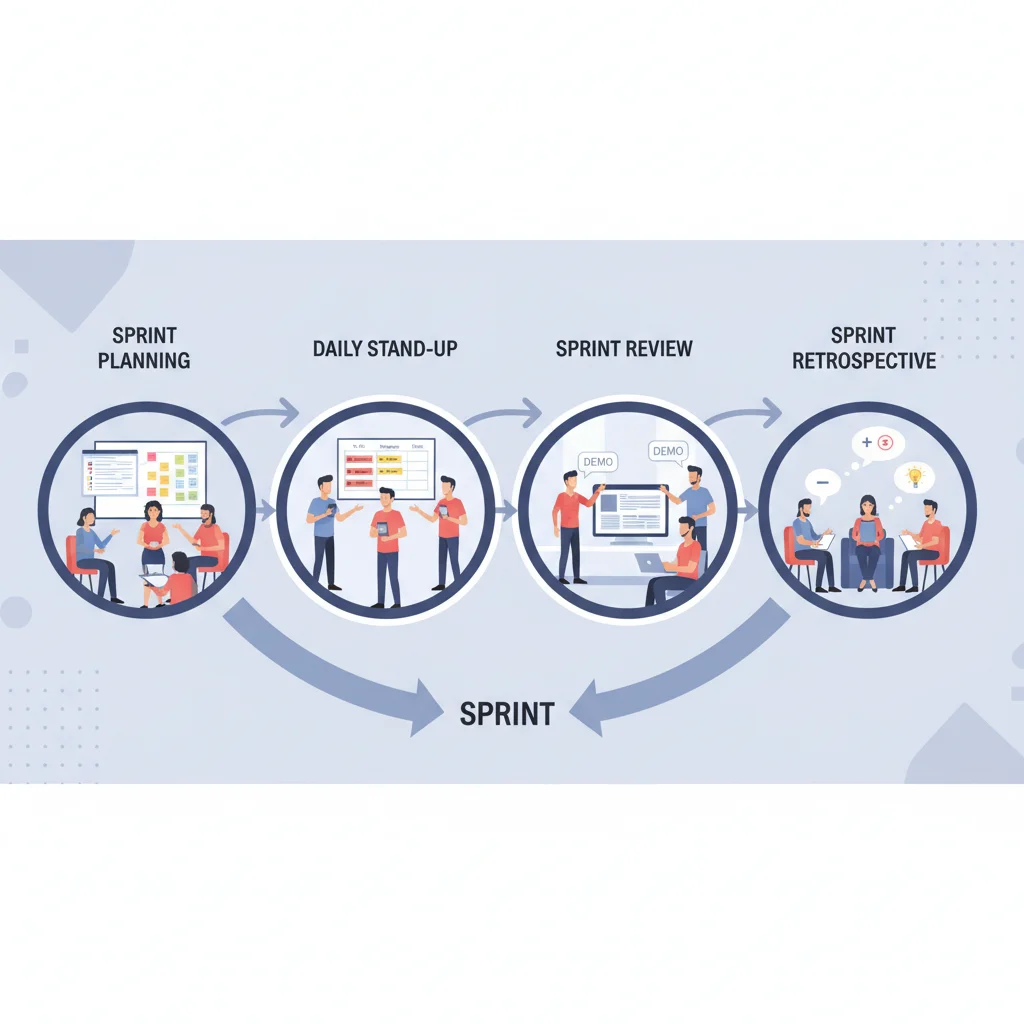
Scrum is arguably the most popular and widely implemented framework for agile project management. It is an iterative and incremental approach that organizes work into short, time-boxed periods called ‘sprints’, typically lasting one to four weeks. Each sprint aims to deliver a potentially shippable increment of the product.
Key Components of Scrum:
- Scrum Team: Comprises a Product Owner, Scrum Master, and Development Team.
- Product Owner: Responsible for maximizing the value of the product, managing the Product Backlog.
- Scrum Master: Facilitates the Scrum process, removes impediments, and coaches the team.
- Development Team: Self-organizing and cross-functional individuals who deliver the product increment.
- Product Backlog: A prioritized list of all features, functions, requirements, enhancements, and fixes needed for the product.
- Sprint Backlog: A subset of the Product Backlog items selected for a particular sprint.
- Sprints: Fixed-length iterations (e.g., 2 weeks) during which a ‘Done’ increment is created.
- Daily Scrum (Stand-up): A short, daily meeting for the Development Team to synchronize activities and plan for the next 24 hours.
- Sprint Review: A meeting at the end of the sprint to inspect the increment and adapt the Product Backlog if needed, involving stakeholders.
- Sprint Retrospective: A meeting for the Scrum Team to inspect itself and create a plan for improvements to be enacted during the next sprint.
Kanban: Visualizing Workflow
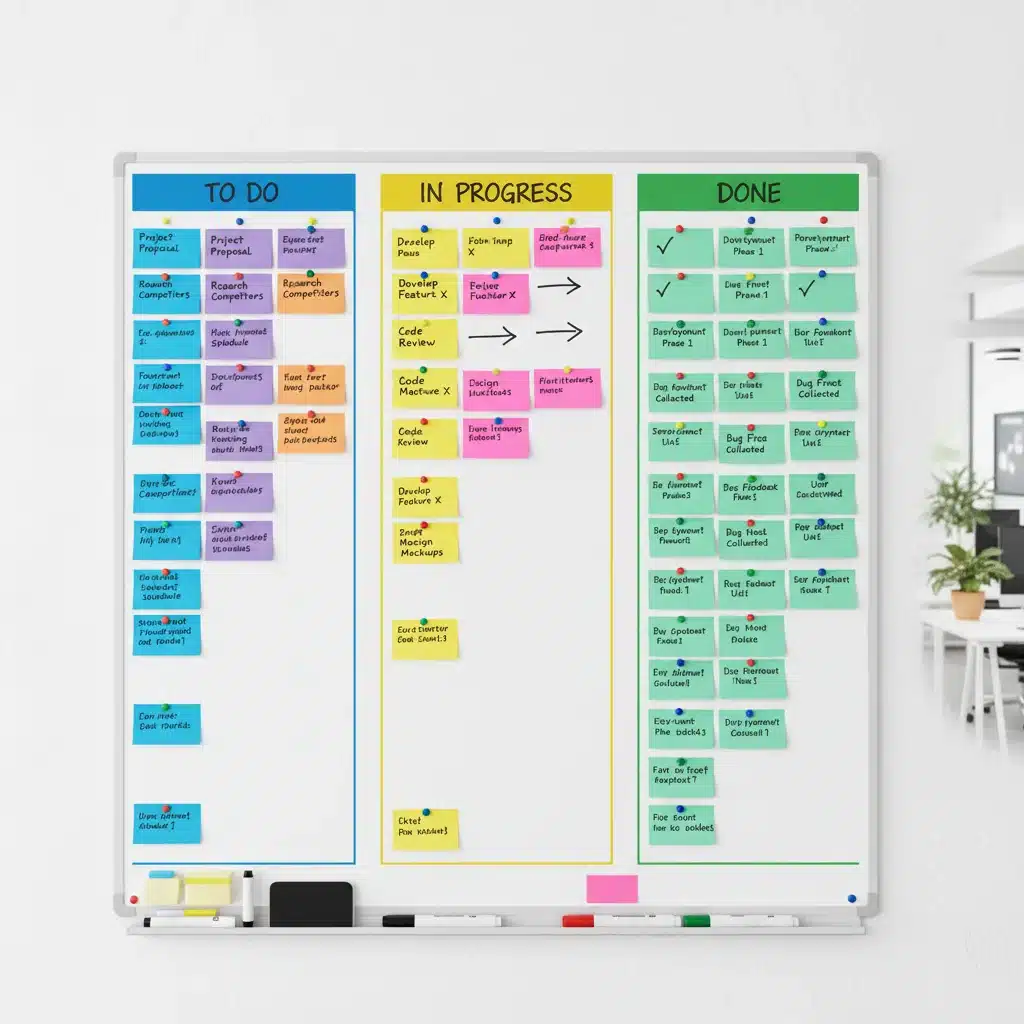
Kanban, originating from Toyota’s production system, is another powerful framework for agile project management, focusing on visualizing work, limiting work in progress (WIP), and maximizing efficiency. It’s particularly effective for continuous delivery and maintenance work.
Key Principles of Kanban:
- Visualize the Workflow: Use a Kanban board to represent each stage of the workflow and the tasks moving through it.
- Limit Work in Progress (WIP): Restrict the number of tasks in each stage to prevent bottlenecks and ensure focus.
- Manage Flow: Monitor and improve the flow of work through the system to optimize delivery speed.
- Make Process Policies Explicit: Clearly define and communicate the rules for how work moves through the system.
- Implement Feedback Loops: Regularly review and adjust the process to ensure continuous improvement.
- Improve Collaboratively, Evolve Experimentally: Foster a culture of continuous improvement through team collaboration and data-driven experimentation.
Lean Software Development: Eliminating Waste
Lean principles, also derived from the Toyota Production System, focus on maximizing customer value while minimizing waste. When applied to agile project management, Lean emphasizes delivering only what is truly essential and eliminating anything that doesn’t add value.
Seven Principles of Lean Software Development:
- Eliminate Waste
- Amplify Learning
- Decide as Late as Possible
- Deliver as Fast as Possible
- Empower the Team
- Build Integrity In
- See the Whole
Implementing Agile Project Management Effectively
Adopting agile project management is more than just implementing a framework; it’s a cultural shift. Successful implementation requires careful planning, commitment, and a willingness to embrace change.
Start Small and Scale Gradually
Don’t try to transform your entire organization overnight. Begin with a single team or a small pilot project. Learn from the experience, refine your approach, and then gradually expand agile practices to other areas of the organization. This iterative approach to adoption mirrors agile principles itself.
Foster a Culture of Trust and Transparency
Agile thrives in an environment where team members trust each other, and information flows freely. Encourage open communication, honest feedback, and transparency regarding progress, challenges, and decisions. This builds a strong foundation for self-organizing teams.
Invest in Training and Coaching
Agile methodologies require new skills and mindsets. Provide adequate training for your teams on the chosen framework (e.g., Scrum Master certification, Product Owner training) and consider bringing in agile coaches to guide the transition and mentor teams. Continuous learning is a cornerstone of effective agile project management.
Empower Self-Organizing Teams
One of the hallmarks of agile is the belief in the power of self-organizing teams. Give your teams the autonomy and responsibility to decide how best to accomplish their work. Provide them with clear goals and the resources they need, then trust them to deliver. This empowerment leads to increased ownership and innovation.
Prioritize Continuously
The Product Backlog is a living document. The Product Owner must continuously prioritize items based on business value, customer feedback, and technical dependencies. This ensures that the team is always working on the most important tasks that deliver the highest value.
Embrace Feedback and Iteration
Regular feedback loops – from daily stand-ups to sprint reviews and retrospectives – are vital. Encourage constructive criticism and use it to refine the product and improve team processes. Agile is all about learning and adapting, so embrace every opportunity to iterate and get better.
Measure What Matters
While traditional metrics like ‘on schedule’ and ‘on budget’ are still relevant, agile introduces new ways to measure success. Focus on metrics that reflect value delivery, team efficiency, and product quality, such as velocity, lead time, cycle time, and customer satisfaction. These metrics provide a more accurate picture of project health and progress within agile project management.
Challenges and How to Overcome Them in Agile Project Management
While agile project management offers numerous benefits, its implementation is not without challenges. Recognizing these hurdles and preparing strategies to overcome them is crucial for success.
Resistance to Change
People are naturally resistant to change, especially when it involves altering established ways of working. This can manifest as skepticism, reluctance to adopt new practices, or even active opposition. To overcome this, focus on clear communication of the ‘why’ behind the agile adoption. Highlight the benefits for individuals and the organization. Provide support, training, and opportunities for feedback to address concerns proactively.
Lack of Management Support
Without strong support from leadership, agile initiatives can falter. Management needs to understand and champion agile principles, allocate necessary resources, and be willing to challenge existing organizational structures that might impede agile teams. Educate leaders on the value of agile and demonstrate early successes to gain their sustained buy-in.
Difficulty in Estimating
Traditional estimation techniques often clash with agile’s iterative nature. Teams may struggle to provide precise estimates for work that is still evolving. Focus on relative sizing (e.g., story points) rather than absolute time estimates. Emphasize forecasting based on historical velocity rather than fixed deadlines for long-term planning. Educate stakeholders on the probabilistic nature of agile estimates.
Scope Creep and Feature Bloat
While agile embraces change, it’s essential to manage scope effectively to avoid endless additions that can overwhelm the team. The Product Owner plays a critical role in saying ‘no’ to non-essential features and ensuring the Product Backlog remains prioritized. Clear definition of ‘Done’ and regular sprint reviews help maintain focus and prevent uncontrolled expansion.
Distributed Teams
Managing distributed agile teams can be challenging due to communication barriers, time zone differences, and lack of informal interactions. Leverage collaboration tools, establish clear communication protocols, schedule overlap times for meetings, and foster a sense of psychological safety to bridge geographical gaps. Regular virtual team-building activities can also help.
Maintaining Quality
The rapid pace of agile development can sometimes lead to concerns about quality. However, agile strongly advocates for building quality in from the start. Practices like Test-Driven Development (TDD), continuous integration, automated testing, and regular code reviews are essential. The ‘Definition of Done’ should always include quality criteria to ensure that every increment meets acceptable standards.
Burnout
The intensity of short sprints and continuous delivery can sometimes lead to team burnout if not managed properly. The Scrum Master has a key role in protecting the team from overcommitment and external pressures. Encourage sustainable pace, enforce work-in-progress limits, promote healthy work-life balance, and ensure regular breaks and adequate rest.
The Future of Agile Project Management
Agile project management is not a static concept; it continues to evolve. Emerging trends and practices are constantly shaping its future:
Scaling Agile
As more large enterprises adopt agile, the need to scale agile practices across multiple teams and departments has become critical. Frameworks like SAFe (Scaled Agile Framework), LeSS (Large-Scale Scrum), and Nexus are gaining traction to address the complexities of enterprise-level agile transformations.
Agile in Non-Software Domains
While born in software, agile is increasingly being applied to non-IT projects, including marketing, HR, product development, and even construction. The principles of iterative delivery, continuous feedback, and adaptive planning prove valuable in diverse contexts.
DevOps Integration
DevOps, a set of practices that combine software development (Dev) and IT operations (Ops), is highly complementary to agile. It aims to shorten the systems development life cycle and provide continuous delivery with high software quality. Integrating DevOps practices enhances the speed and reliability of agile deployments.
AI and Machine Learning in Agile
Artificial intelligence and machine learning are beginning to play a role in optimizing agile processes. AI can assist with backlog prioritization, predict potential roadblocks, analyze team performance, and even automate certain testing processes, making agile teams even more efficient and data-driven.
Focus on Human-Centric Agile
There’s a growing emphasis on the human element within agile – fostering psychological safety, promoting diversity and inclusion, and focusing on team well-being. A truly agile organization recognizes that its people are its greatest asset and invests in creating an environment where they can thrive.
Conclusion: Embracing Agility for Enduring Success
Agile project management is more than a methodology; it’s a mindset that empowers teams to deliver high-quality products, adapt to change, and continuously improve. By embracing its core principles – customer collaboration, iterative delivery, and a focus on individuals and interactions – organizations can navigate the complexities of modern projects with greater success.
Whether you choose Scrum, Kanban, or a hybrid approach, the key lies in understanding the underlying values of agile and applying them consistently. The journey to becoming truly agile is continuous, requiring dedication, learning, and a willingness to evolve. However, the rewards – faster time-to-market, higher customer satisfaction, improved team morale, and enhanced adaptability – make it an invaluable investment for any organization striving for excellence in today’s dynamic world. Start your agile journey today and unlock the full potential of your projects and teams.