Mastering Agile Methodology: A Comprehensive Guide to Project Success

Mastering Agile Methodology: A Comprehensive Guide to Project Success
In today’s fast-paced business environment, the ability to adapt, innovate, and deliver value rapidly is paramount. Traditional project management methodologies, often characterized by their rigid, linear approach, frequently struggle to keep up with evolving requirements and market demands. This is where agile project success comes into play, offering a flexible and iterative framework that empowers teams to respond to change effectively and consistently deliver high-quality products or services.
This comprehensive guide delves deep into the world of agile methodology, providing you with the knowledge and strategies needed to not only understand its principles but also to implement them successfully within your organization. Whether you’re new to agile or looking to refine your existing practices, this article will serve as your ultimate resource for achieving unparalleled agile project success.
Agile is more than just a set of tools or processes; it’s a mindset, a philosophy that prioritizes individuals and interactions, working software, customer collaboration, and responding to change. By embracing these core values, organizations can foster environments where innovation thrives, teams are empowered, and customer satisfaction becomes the ultimate measure of achievement.
The Foundations of Agile: Understanding Its Core Principles
To truly master agile project success, it’s crucial to grasp the foundational principles that underpin this transformative approach. The Agile Manifesto, penned in 2001 by seventeen independent-minded software practitioners, laid out these core values and twelve supporting principles that continue to guide agile practices worldwide.
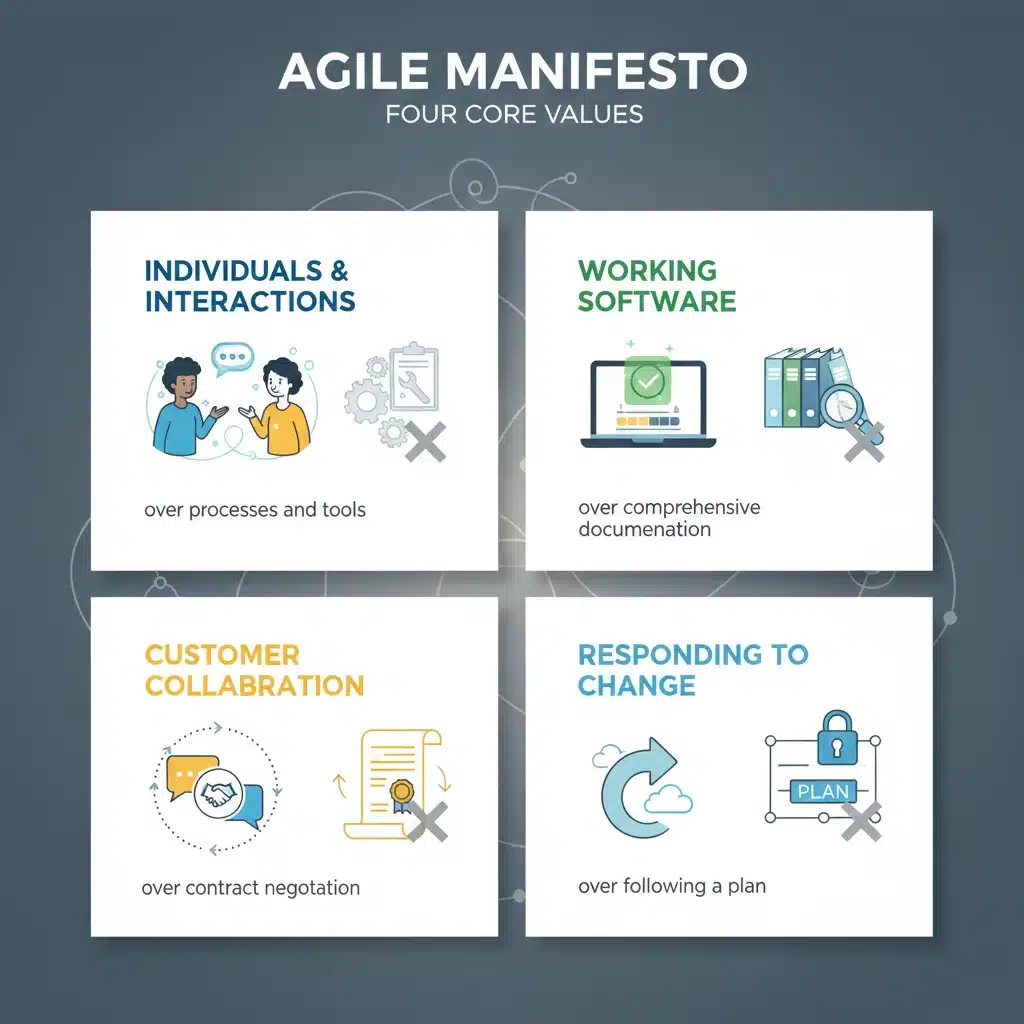
The Agile Manifesto: Four Core Values
- Individuals and Interactions over Processes and Tools: While processes and tools are important, agile emphasizes the power of human collaboration and communication. Empowered, self-organizing teams are more effective than rigid adherence to predefined steps.
- Working Software over Comprehensive Documentation: The primary measure of progress in agile is working software (or a functional product/service). While documentation is necessary, it should be concise and serve the purpose of facilitating understanding and collaboration, not as an end in itself.
- Customer Collaboration over Contract Negotiation: Agile advocates for continuous engagement with the customer throughout the project lifecycle. This collaborative approach ensures that the product being built truly meets their evolving needs and expectations, reducing the risk of misalignment.
- Responding to Change over Following a Plan: In a dynamic environment, change is inevitable. Agile embraces change, viewing it as an opportunity to deliver better value, rather than a deviation from a fixed plan. This adaptability is key to agile project success.
The Twelve Principles Behind the Agile Manifesto
Beyond the four values, the Agile Manifesto also outlines twelve principles that provide further guidance for agile teams:
- Our highest priority is to satisfy the customer through early and continuous delivery of valuable software.
- Welcome changing requirements, even late in development. Agile processes harness change for the customer’s competitive advantage.
- Deliver working software frequently, from a couple of weeks to a couple of months, with a preference to the shorter timescale.
- Business people and developers must work together daily throughout the project.
- Build projects around motivated individuals. Give them the environment and support they need, and trust them to get the job done.
- The most efficient and effective method of conveying information to and within a development team is face-to-face conversation.
- Working software is the primary measure of progress.
- Agile processes promote sustainable development. The sponsors, developers, and users should be able to maintain a constant pace indefinitely.
- Continuous attention to technical excellence and good design enhances agility.
- Simplicity—the art of maximizing the amount of work not done—is essential.
- The best architectures, requirements, and designs emerge from self-organizing teams.
- At regular intervals, the team reflects on how to become more effective, then tunes and adjusts its behavior accordingly.
Understanding and internalizing these principles are fundamental to cultivating an agile mindset and achieving consistent agile project success.
Popular Agile Methodologies: Tools for Agile Project Success
While agile is a philosophy, several frameworks and methodologies have emerged to put its principles into practice. Each offers a unique approach to structuring work, but all share the common goal of fostering adaptability, collaboration, and continuous delivery of value. Exploring these can significantly contribute to your agile project success.
Scrum: The Most Widely Adopted Framework
Scrum is an iterative, incremental framework for managing product development. It’s designed for teams of ten or fewer members who break their work into short, time-boxed iterations called ‘Sprints,’ typically lasting one to four weeks. The goal of each Sprint is to produce a potentially shippable increment of the product.
Key roles in Scrum include the Product Owner (responsible for maximizing product value), the Scrum Master (facilitates the Scrum process and removes impediments), and the Development Team (cross-functional individuals who build the increment).
Scrum’s ceremonies (events) are crucial for its effectiveness:
- Sprint Planning: The team plans the work to be performed in the upcoming Sprint.
- Daily Scrum (Stand-up): A short daily meeting for the Development Team to synchronize activities and plan for the next 24 hours.
- Sprint Review: The team demonstrates the completed work to stakeholders and gathers feedback.
- Sprint Retrospective: The team reflects on the past Sprint and identifies improvements for the next.
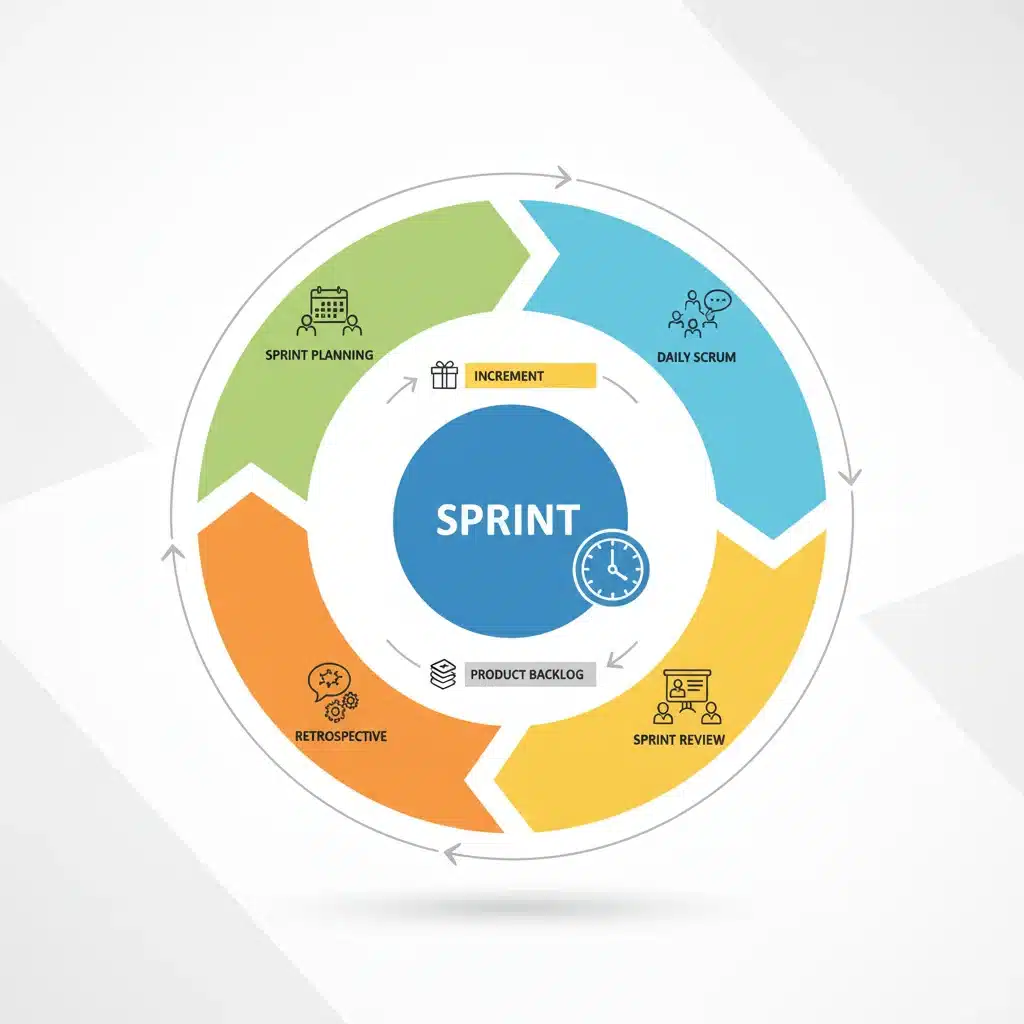
Scrum’s emphasis on short cycles, continuous feedback, and self-organizing teams makes it an incredibly powerful tool for driving agile project success, especially in complex and rapidly changing environments.
Kanban: Visualizing Workflow for Efficiency
Kanban, originating from Toyota’s production system, is a method for managing and improving work across human systems. It’s characterized by its visual nature, typically using a Kanban board to represent the workflow and limit work in progress (WIP).
The core principles of Kanban include:
- Visualize Workflow: Make all work items and their status visible.
- Limit Work in Progress (WIP): Restrict the number of items being worked on at any given time to improve focus and throughput.
- Manage Flow: Monitor, measure, and improve the flow of work through the system.
- Make Process Policies Explicit: Clearly define how work is done.
- Implement Feedback Loops: Regularly review and adapt the process.
- Improve Collaboratively, Evolve Experimentally: Encourage continuous improvement through shared understanding and scientific method.
Kanban is highly adaptable and can be applied to almost any type of work. Its focus on continuous delivery, reducing bottlenecks, and improving efficiency directly contributes to agile project success by ensuring a smooth and predictable flow of value.
Lean Software Development: Eliminating Waste
Derived from the Lean manufacturing principles, Lean Software Development focuses on maximizing customer value while minimizing waste. It’s guided by seven core principles:
- Eliminate Waste: Identify and remove anything that doesn’t add value to the customer (e.g., unnecessary features, excessive documentation, waiting time).
- Amplify Learning: Foster continuous learning and knowledge sharing within the team.
- Decide as Late as Possible: Defer irreversible decisions until the last responsible moment to allow for more information and flexibility.
- Deliver Fast: Shorten feedback loops and deliver value quickly.
- Empower the Team: Trust and empower self-organizing teams to make decisions.
- Build Integrity In: Focus on building quality into the product from the start.
- See the Whole: Understand the entire system and optimize for the whole, not just individual parts.
By relentlessly focusing on value and efficiency, Lean principles can significantly enhance agile project success, leading to faster delivery, higher quality, and reduced costs.
DevOps: Bridging Development and Operations
While often seen as a separate discipline, DevOps is deeply intertwined with agile, extending its principles of collaboration, automation, and continuous delivery to the entire software delivery pipeline, from development to operations. It aims to shorten the systems development life cycle and provide continuous delivery with high software quality.
Key aspects of DevOps include:
- Continuous Integration (CI): Regularly merging code changes into a central repository.
- Continuous Delivery (CD): Automatically building, testing, and preparing code for release.
- Continuous Deployment (CD): Automatically deploying every change that passes automated tests to production.
- Infrastructure as Code (IaC): Managing and provisioning infrastructure through code rather than manual processes.
- Monitoring and Logging: Proactive monitoring of applications and infrastructure to identify and resolve issues quickly.
DevOps practices are essential for achieving end-to-end agile project success, enabling organizations to release new features and updates rapidly and reliably, directly impacting customer satisfaction and market competitiveness.
Implementing Agile for Optimal Agile Project Success
Adopting agile isn’t a one-time event; it’s a continuous journey of learning, adaptation, and improvement. Successful implementation requires careful planning, a commitment from leadership, and a willingness to embrace change across the organization. Here’s how to pave the way for consistent agile project success.
Building an Agile Culture and Mindset
The most significant barrier to agile adoption is often cultural, not technical. Shifting from a traditional, command-and-control structure to an agile, collaborative, and empowered environment requires a fundamental change in mindset. This involves:
- Leadership Buy-in: Agile transformation must start from the top. Leaders need to champion agile values, provide resources, and remove impediments.
- Trust and Transparency: Foster an environment where teams feel safe to experiment, fail fast, and learn. Transparency in progress, challenges, and decisions builds trust.
- Empowerment and Autonomy: Give teams the authority and responsibility to make decisions about how they do their work. Self-organizing teams are more motivated and innovative.
- Continuous Learning: Encourage a culture of continuous learning, feedback, and improvement. Agile is about adapting, and that requires constant reflection and adjustment.
- Customer-Centricity: Keep the customer at the heart of all decisions. Understand their needs, gather their feedback, and prioritize features that deliver the most value to them.
Cultivating an agile culture is a long-term investment that yields significant dividends in terms of employee engagement, innovation, and ultimately, agile project success.
Key Roles and Responsibilities in Agile Teams
While specific roles might vary depending on the chosen framework (e.g., Scrum Master, Product Owner in Scrum), several common responsibilities are crucial for agile project success:
- Product Owner/Manager: Defines and prioritizes the product backlog, ensuring it aligns with business goals and customer needs. They are the voice of the customer.
- Team Members (Developers, Testers, Designers, etc.): Self-organizing and cross-functional individuals responsible for delivering the working product increment. They collaboratively plan, execute, and test their work.
- Agile Coach/Scrum Master: Facilitates the agile process, coaches the team on agile principles, removes impediments, and helps the team improve its practices.
- Stakeholders: Provide input, feedback, and support to the agile team, ensuring the product meets their expectations and business objectives.
Clear understanding and execution of these roles are vital for effective collaboration and achieving agile project success.
Effective Agile Planning and Estimation
Agile planning is iterative and adaptive, focusing on short-term goals while maintaining a long-term vision. It’s not about creating a detailed, fixed plan upfront but rather about continuously refining and adjusting based on feedback and new information.
- Product Vision and Roadmap: Define a clear, overarching vision for the product and a high-level roadmap outlining key features and milestones.
- Product Backlog: A prioritized list of features, enhancements, bug fixes, and other items that need to be delivered. It’s dynamic and constantly refined.
- User Stories: Describe features from the perspective of the end-user, focusing on the value they provide.
- Estimation Techniques: Agile teams use various techniques like Planning Poker, T-shirt sizing, or affinity estimation to estimate the effort required for backlog items. The focus is on relative sizing rather than absolute time.
- Release Planning: High-level planning for multiple Sprints or iterations, outlining what features are expected in upcoming releases.
- Sprint Planning: Detailed planning for the next iteration, where the team selects items from the product backlog to commit to and defines how they will accomplish the work.
Adaptive planning and realistic estimation are critical for maintaining momentum and achieving predictable agile project success.
Challenges and Best Practices for Sustained Agile Project Success
While agile offers numerous benefits, its implementation is not without challenges. Organizations often encounter hurdles related to cultural resistance, scaling agile, or integrating it with existing systems. However, with the right strategies and best practices, these challenges can be overcome, leading to sustained agile project success.
Common Challenges in Agile Adoption
- Cultural Resistance: Resistance to change, fear of losing control, and ingrained habits from traditional methodologies can hinder agile adoption.
- Lack of Leadership Support: Without strong leadership buy-in and active participation, agile initiatives often fail to gain traction.
- Misunderstanding Agile Principles: Treating agile as merely a set of tools or ceremonies without understanding its underlying values leads to ‘ScrumBut’ or ‘Agile-in-name-only’ scenarios.
- Scaling Agile: Applying agile principles to large, complex organizations with multiple teams and dependencies can be challenging.
- Integration with Existing Systems: Integrating agile development with legacy systems, traditional compliance requirements, or existing organizational structures can be difficult.
- Lack of Technical Excellence: Poor engineering practices can undermine agile’s benefits, leading to technical debt and reduced quality.
Addressing these challenges proactively is key to ensuring a smooth transition and achieving long-term agile project success.
Best Practices for Maximizing Agile Project Success
To truly excel with agile, consider incorporating these best practices:
- Start Small and Iterate: Begin with a pilot project or a small team to build confidence and gather lessons learned before scaling.
- Invest in Training and Coaching: Provide comprehensive training on agile principles and specific frameworks. Engage experienced agile coaches to guide teams and leadership.
- Foster Cross-Functional Teams: Ensure teams have all the necessary skills to deliver a complete increment of work, reducing external dependencies.
- Prioritize Ruthlessly: The Product Owner must continuously prioritize the backlog based on business value and customer needs, ensuring the team is always working on the most important items.
- Embrace Continuous Feedback: Implement regular feedback loops with customers and stakeholders. Use Sprint Reviews, user acceptance testing, and direct communication to gather insights.
- Automate Where Possible: Automate testing, build processes, and deployments to increase speed, reduce errors, and ensure consistent quality. This is crucial for agile project success.
- Regular Retrospectives: Dedicate time at the end of each iteration for the team to reflect on what went well, what could be improved, and how to implement those improvements. This drives continuous improvement.
- Visualize Work and Progress: Use Kanban boards, burn-down charts, and other visual tools to make work transparent and easily understandable by everyone.
- Manage Technical Debt: Proactively address technical debt to maintain system health and prevent it from slowing down future development.
- Celebrate Successes and Learn from Failures: Acknowledge achievements and view failures as learning opportunities, fostering a positive and resilient team environment.
By consistently applying these best practices, organizations can significantly increase their chances of achieving and sustaining agile project success.
Measuring Agile Project Success: Metrics and KPIs
How do you know if your agile implementation is truly delivering value? Measuring agile project success goes beyond traditional metrics like budget and schedule adherence. It focuses on delivering working software, customer satisfaction, and team health. Here are some key metrics and KPIs to consider:
Product-Focused Metrics
- Customer Satisfaction: Directly measure customer happiness through surveys, Net Promoter Score (NPS), or feedback during Sprint Reviews.
- Business Value Delivered: Quantify the actual business impact of delivered features (e.g., increased revenue, reduced costs, improved conversion rates).
- Throughput: The number of user stories or features completed per unit of time.
- Lead Time/Cycle Time: The time it takes for a work item to move from idea to delivered value. Shorter times indicate greater agility.
- Defect Density: The number of defects per unit of code or feature. Lower density indicates higher quality.
- Feature Usage: Track how often and effectively users are interacting with new features.
Team-Focused Metrics
- Velocity: The amount of work a Scrum team can complete in a Sprint, typically measured in story points. This is a planning tool, not a performance metric for comparison between teams.
- Team Morale/Engagement: Measure team happiness and engagement through surveys, retrospectives, and observation.
- Burn-down/Burn-up Charts: Visual representations of work remaining or work completed in a Sprint or release.
- Blocker Frequency/Resolution Time: Track how often the team encounters impediments and how quickly they are resolved.
Process-Focused Metrics
- Retrospective Action Item Completion: Track the percentage of improvement actions identified in retrospectives that are actually implemented.
- Test Coverage: The percentage of code covered by automated tests, indicating the robustness of the testing process.
- Deployment Frequency: How often new code is deployed to production. Higher frequency suggests a more efficient delivery pipeline.
It’s important to choose metrics that are relevant to your specific context and goals. The aim is not to micromanage but to gain insights that drive continuous improvement and ensure genuine agile project success.
The Future of Agile: Trends and Evolution
Agile is not static; it’s a dynamic methodology that continues to evolve in response to new technologies, market demands, and organizational needs. Staying abreast of these trends is essential for maintaining and enhancing agile project success.
Emerging Trends in Agile
- AI and Machine Learning in Agile: AI is increasingly being used to enhance agile practices, from intelligent backlog prioritization and automated testing to predictive analytics for project risks.
- Hybrid Approaches: Many organizations are adopting hybrid models that combine agile with elements of traditional project management, especially for large-scale or highly regulated projects.
- Business Agility Beyond IT: Agile principles are expanding beyond software development to other areas of the business, including marketing, HR, and operations, aiming for enterprise-wide agile project success.
- Value Stream Management (VSM): A holistic approach that focuses on optimizing the entire flow of value from idea to customer, integrating agile, Lean, and DevOps practices.
- Distributed Agile Teams: With the rise of remote work, strategies for effective collaboration and communication in geographically dispersed agile teams are becoming increasingly important.
- Focus on Outcomes over Outputs: A growing emphasis on measuring the actual impact and value delivered to customers (outcomes) rather than just the features produced (outputs).
These trends highlight agile’s adaptability and its enduring relevance in the modern business landscape. Embracing these evolutions can further solidify your path to long-term agile project success.
Conclusion: Embracing Agile for Transformative Project Outcomes
Mastering agile methodology is no longer a luxury but a necessity for organizations striving to remain competitive and innovative in today’s dynamic world. By embracing its core principles – prioritizing individuals and interactions, delivering working software, collaborating with customers, and responding to change – businesses can transform their project outcomes, foster a culture of continuous improvement, and achieve unparalleled agile project success.
The journey to agile mastery involves understanding its foundational values, selecting appropriate frameworks like Scrum or Kanban, building an agile-first culture, and committing to continuous learning and adaptation. While challenges will inevitably arise, the rewards of increased efficiency, higher quality products, and enhanced customer satisfaction far outweigh the effort. Start your agile transformation today, and unlock the full potential of your teams and projects.
Remember, agile is a journey, not a destination. It requires dedication, flexibility, and a willingness to evolve. By consistently applying the insights and best practices outlined in this guide, you are well-equipped to navigate this journey and achieve remarkable agile project success.