AI in Fashion: Predicting US Trends for Fall 2026
The Impact of AI on Fashion Forecasting: 3 Ways Technology is Predicting US Trends for Fall 2026
The fashion industry, long driven by intuition, gut feelings, and the pronouncements of a select few trendsetters, is undergoing a seismic shift. The catalyst? Artificial Intelligence. As we look towards Fall 2026, the traditional crystal ball of fashion forecasting is being replaced by sophisticated algorithms and data-driven insights. This article explores the profound impact of AI fashion forecasting, detailing three critical ways technology is not just influencing but actively predicting US trends for the upcoming seasons.
The stakes in fashion are incredibly high. Billions of dollars are invested annually in design, manufacturing, and marketing, all predicated on the hope that consumers will embrace the latest collections. Misjudging a trend can lead to massive waste, unsold inventory, and significant financial losses. This is where AI fashion forecasting steps in, offering a more precise, efficient, and sustainable approach to an inherently volatile market.
1. Harnessing Big Data for Unprecedented Accuracy in Trend Prediction
At the heart of AI’s power lies its ability to process and analyze colossal amounts of data at speeds and scales unimaginable to human analysts. For fashion, this ‘big data’ encompasses a vast array of sources:
Advertisements
- Social Media Analytics: Billions of posts, likes, shares, and comments across platforms like Instagram, TikTok, Pinterest, and Twitter provide a real-time pulse on consumer sentiment and emerging styles. AI can identify micro-trends as they begin to bubble up, long before they hit mainstream media. It can track the popularity of specific colors, silhouettes, fabrics, and even garment details, offering granular insights into what consumers are gravitating towards. This isn’t just about counting hashtags; it’s about understanding the nuances of visual content, the emotional tone of discussions, and the influence of key opinion leaders.
- Runway and Street Style Analysis: AI algorithms can ‘watch’ thousands of runway shows from fashion weeks around the globe, identifying recurring themes, new design elements, and color palettes. Beyond the catwalk, these systems can analyze countless street style photographs, discerning how high fashion trickles down to everyday wear and how organic trends emerge from the ground up. Computer vision technologies are particularly adept at recognizing patterns in images, allowing for objective analysis of garment features, accessories, and overall aesthetic.
- Sales Data and E-commerce Trends: Historical sales data, combined with real-time e-commerce analytics, provides invaluable information on what consumers are actually buying, returning, and even just browsing. AI can identify seasonal shifts, geographic preferences, and the impact of promotions or external events on purchasing behavior. By correlating sales data with other trend indicators, AI can build predictive models that anticipate future demand with remarkable accuracy. This also includes analyzing search queries, wish lists, and cart abandonment rates, offering a comprehensive view of consumer intent.
- News, Culture, and Global Events: Fashion is rarely isolated from the broader socio-cultural and political landscape. AI can monitor global news, cultural phenomena, movie releases, music trends, and even economic indicators to identify potential influences on consumer behavior and fashion preferences. For example, a resurgence in vintage aesthetics might be linked to nostalgic media, or a shift towards comfort wear might be influenced by global health concerns.
By integrating and cross-referencing these diverse data streams, AI fashion forecasting models can identify complex patterns and correlations that would be impossible for human analysts to detect. This leads to highly accurate predictions, allowing brands to make informed decisions about design, production, and inventory, ultimately reducing waste and increasing profitability. For Fall 2026, AI is already sifting through these massive datasets, predicting a blend of sustainability-focused materials, gender-fluid designs, and a continued emphasis on comfort with a touch of curated maximalism.

2. Predictive Analytics and Machine Learning for Future Trend Identification
Beyond simply analyzing existing data, AI fashion forecasting leverages advanced predictive analytics and machine learning algorithms to anticipate future trends. These technologies don’t just tell us what’s popular now; they forecast what will be popular next, and why.
- Neural Networks and Deep Learning: These sophisticated AI models are designed to mimic the human brain, learning from vast amounts of data to identify intricate relationships and make predictions. In fashion, deep learning algorithms can be trained on millions of images of clothing, accessories, and styled outfits to understand the underlying aesthetics and evolving preferences. They can recognize subtle shifts in design elements, color harmonies, and material textures, predicting how these elements will combine to form future trends. For example, a neural network might identify that a specific shade of green, initially seen in niche streetwear, is gaining traction across multiple demographics and predict its widespread adoption in mainstream collections for Fall 2026.
- Time Series Analysis: This statistical technique, enhanced by AI, is used to analyze data points collected over time to identify trends, cycles, and seasonal patterns. By examining historical fashion cycles and current growth trajectories, AI can project the longevity and trajectory of emerging trends. This helps differentiate fleeting fads from enduring styles, allowing designers to invest in pieces with longer shelf lives. For instance, AI might predict that while a certain exaggerated silhouette might be a short-term hit, a focus on durable, multi-functional outerwear will be a more sustained trend for the colder months of Fall 2026.
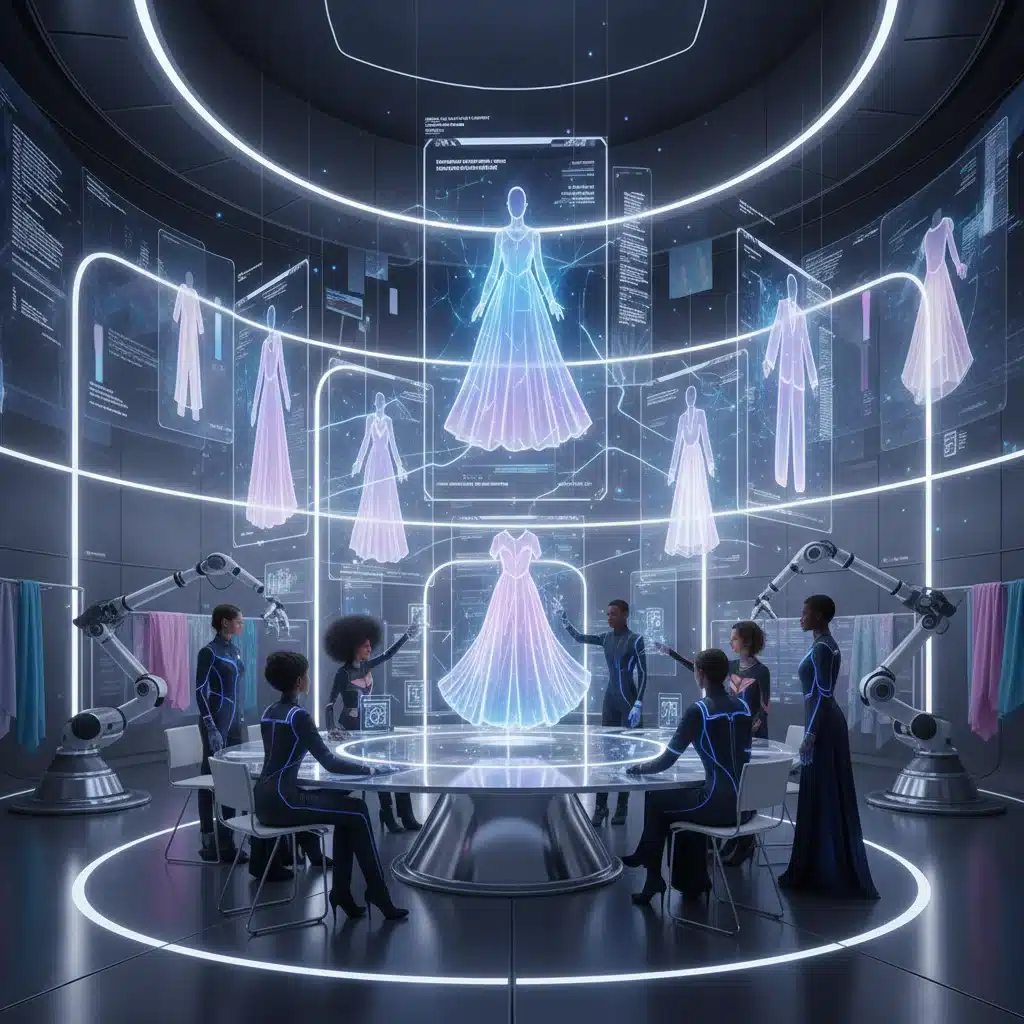
- Generative AI for Design Inspiration: A burgeoning area within AI fashion forecasting is the use of generative AI. These models can create entirely new designs, patterns, and even entire collections based on learned aesthetics and predictive trend data. While still in its early stages for mainstream adoption, generative AI can serve as a powerful tool for designers, offering novel ideas and helping to visualize potential future trends. Imagine AI generating a mood board for Fall 2026 that not only includes predicted colors and fabrics but also suggests innovative garment constructions and styling combinations that align with anticipated consumer desires. This moves AI beyond just prediction to active creation.
- Sentiment Analysis: AI-powered natural language processing (NLP) is crucial for sentiment analysis. By analyzing text data from social media, customer reviews, and fashion forums, AI can gauge public opinion and emotional responses to various styles and brands. This helps to understand not just what people are wearing, but how they feel about it, and what aspirations drive their fashion choices. A positive shift in sentiment towards sustainable and ethical fashion, for instance, would be a strong indicator for future trend adoption.
The predictive capabilities of AI are transforming the design and production cycles. Instead of waiting for trends to solidify, brands can proactively adapt their collections, ensuring they are always one step ahead of consumer demand. For Fall 2026, this means a more agile and responsive fashion industry, capable of delivering what consumers want, when they want it, with minimal waste.
3. Personalized Recommendations and Consumer Engagement
The impact of AI fashion forecasting extends beyond macro trends to individual consumer preferences, revolutionizing how brands engage with their audience and offer personalized experiences. This is crucial in a market increasingly driven by individuality and bespoke offerings.
- Hyper-Personalized Product Recommendations: AI algorithms can analyze an individual’s browsing history, purchase patterns, social media activity, and even body type data to offer highly personalized product recommendations. This moves beyond simple ‘customers who bought this also bought…’ to suggesting entire outfits, styling tips, and new arrivals that perfectly align with a user’s unique taste and predicted future preferences. For Fall 2026, this means consumers will receive tailored suggestions for outerwear, knitwear, and accessories that resonate with their personal style evolution, often before they even realize they want them. This reduces decision fatigue and increases conversion rates.
- Virtual Try-On Technologies: While not strictly forecasting, virtual try-on, powered by AI and augmented reality (AR), plays a significant role in consumer adoption of trends. By allowing customers to ‘try on’ clothes virtually, brands can gather valuable data on which styles are most appealing, which fits are preferred, and what combinations resonate. This feedback loop can then feed back into the AI fashion forecasting models, refining predictions and ensuring that future collections are even more aligned with consumer desires. For Fall 2026, expect more sophisticated virtual try-on experiences that accurately render fabric textures and drape, enhancing the online shopping experience.
- Dynamic Pricing and Inventory Management: AI can optimize pricing strategies and inventory levels by predicting demand fluctuations. This means reducing markdowns on unpopular items and ensuring popular items are always in stock, minimizing both financial losses and environmental waste. By understanding the lifecycle of a trend, AI can guide decisions on when to ramp up production, when to discount, and when to phase out certain styles. This data-driven approach ensures that the right products are available at the right price, at the right time.
- Customer Service and Chatbots: AI-powered chatbots and virtual assistants are becoming increasingly sophisticated, providing personalized customer support, answering style-related questions, and even offering styling advice. These tools can learn from customer interactions, improving their ability to understand and respond to individual needs, further enhancing the personalized shopping experience. They can also collect valuable feedback that contributes to the overall trend forecasting process.
By leveraging AI for personalization, brands can foster deeper connections with their customers, build loyalty, and ensure that their offerings are always relevant. This consumer-centric approach, driven by AI fashion forecasting, is not just about selling more clothes; it’s about creating a more satisfying and efficient shopping experience for everyone.
Challenges and Ethical Considerations in AI Fashion Forecasting
While the benefits of AI fashion forecasting are undeniable, it’s also important to acknowledge the challenges and ethical considerations that come with its increasing adoption.
- Data Privacy: The reliance on vast amounts of consumer data raises significant privacy concerns. Brands must ensure transparency in data collection and usage, adhering to regulations like GDPR and CCPA, and building trust with their customers. Misuse of data could lead to backlash and erode consumer confidence.
- Bias in Algorithms: AI models are only as unbiased as the data they are trained on. If historical fashion data reflects existing biases (e.g., lack of diversity in models, limited size ranges), the AI might perpetuate or even amplify these biases in its predictions. Addressing this requires careful curation of diverse training data and continuous auditing of algorithms to ensure fairness and inclusivity.
- Loss of Human Creativity: Some fear that over-reliance on AI could stifle human creativity and intuition in design. While AI can provide data-driven insights, the spark of innovation, artistic vision, and cultural understanding that human designers bring is irreplaceable. The ideal scenario is a collaborative one, where AI acts as a powerful tool to augment and inspire human creativity, not replace it.
- Fast Fashion Acceleration: If AI makes trend prediction too efficient, there’s a risk it could further accelerate the fast fashion cycle, leading to even greater environmental impact. The industry must balance the benefits of accurate forecasting with a commitment to sustainable practices and responsible consumption. AI can also be leveraged to promote sustainability by predicting demand for eco-friendly materials or identifying circular fashion trends.
- Job Displacement: As AI takes on tasks traditionally performed by human trend forecasters, merchandisers, and even some designers, there are concerns about job displacement. The focus should be on upskilling the workforce to collaborate with AI, transforming roles rather than eliminating them entirely.
Addressing these challenges requires a thoughtful and proactive approach, ensuring that AI is developed and implemented responsibly, ethically, and with a focus on long-term sustainability for both the industry and the planet.
The Future of Fashion is Intelligent
As we look ahead to Fall 2026 and beyond, it’s clear that AI fashion forecasting is not a passing trend but a fundamental transformation of the industry. From predicting macro trends to personalizing individual shopping experiences, AI is providing unprecedented insights and efficiency.
Designers are no longer solely relying on inspiration boards and intuition; they are increasingly informed by data that reveals what consumers truly desire. Retailers can optimize their inventory, reduce waste, and improve profitability by accurately anticipating demand. Consumers benefit from more relevant offerings and highly personalized shopping journeys.
The convergence of creativity and technology is reshaping the very fabric of fashion. While the human element of design and artistry will always remain paramount, AI serves as an indispensable partner, empowering the industry to be more responsive, sustainable, and consumer-centric than ever before. The future of fashion is intelligent, data-driven, and continuously evolving, promising a more exciting and efficient landscape for all.
Embracing AI fashion forecasting is no longer an option but a necessity for brands aiming to thrive in the competitive and rapidly changing world of fashion. Those who leverage this technology effectively will be the ones setting the trends, meeting consumer demands, and ultimately shaping the aesthetic of Fall 2026 and beyond.